
Sioux County Warrant Checks
Start with the Sioux County Sheriff's Warrant List, a downloadable PDF rather than a search form. Open it, check the printed update time, and use the viewer's find tool to search a full legal name. A possible match only begins verification. Similar names mislead. So does a stale snapshot. Next, take the name to Iowa Courts Online and search the Trial Court docket by name, case number, or citation number, then open the case link to read the chronological summary and financial details. The state itself says this view is not the official court record. For a firm answer in Sioux County, the Clerk of Court can confirm the case and explain whether a hearing, payment, or a judge's order comes next.
- Review the Sheriff's dated PDF and note the warrant number, issue date, charge, and bond field.
- Search Iowa Courts Online for the related docket and recent court events.
- Call the Clerk at 712-737-2286 for the issuing case and court instructions.
- Call Sheriff administration at 712-737-2280 or the jail at 712-737-3131 for current agency confirmation.
- Before surrender or payment, ask counsel and the issuing court what resolves the warrant itself.
Sioux County PDF Snapshot
The Sheriff publishes a fixed report, not an interactive Sioux County warrant database. The file runs 24 pages and carries its own date and time stamp. There are no filters, sort controls, login, result limit, or search fields. Readers search locally with the PDF viewer, which makes the stamp critical: court action and report generation rarely happen at the same moment. The roster can flag an agency record, but a blank result is no legal finding that no warrant exists. A new entry may not have made the file yet. Sealed or juvenile matters stay out of the public view. Another county may hold the order, or a court event may surface in the docket first. For current status, confirm with the Sioux County Sheriff or the Clerk.
Warrants in Sioux County: Main Types
Sioux County warrant records follow several legal paths. A probable-cause arrest warrant is not the same thing as a court's response to a missed date or an unpaid obligation. A search warrant authorizes a search, not an arrest. Those distinctions shape what the public can see and which office controls the next step.
| Type | How it arises | Public route |
|---|---|---|
| Arrest warrant | A magistrate approves a complaint after finding probable cause. | Sheriff list, court docket, Clerk, and Sheriff. |
| Bench or FTA | A missed appearance, contempt issue, or failure to obey a court order. | Underlying docket and Sioux County Clerk. |
| Traffic-related | A citation, missed court date, debt, or related order. | Iowa Courts Online, payment route, and Clerk. |
| Search warrant | A judge authorizes a search based on probable cause. | Not a public self-lookup product; confidentiality applies. |
Iowa sources use "failure to appear," "contempt," and court-debt terms. The Texas phrase "capias pro fine" is not a label Sioux County uses.
Sioux County Court Docket
Iowa Courts Online supplies the case view the Sheriff PDF cannot. A name search may surface a case number; a known case or citation number narrows the route further. The chronological summary can show an appearance, an order, a failure-to-appear event, or later action, while the financial section lists fees and court debt. Never read a balance as warrant status, though. Payment can settle debt while a separate warrant or contempt order still waits on a judge. An empty result can mean confidentiality, timing, or a search mismatch. The Sioux County Clerk of Court keeps the official file and is the right source for case-specific confirmation. The state's search interface itself offers the name, case number, and citation number routes described here.
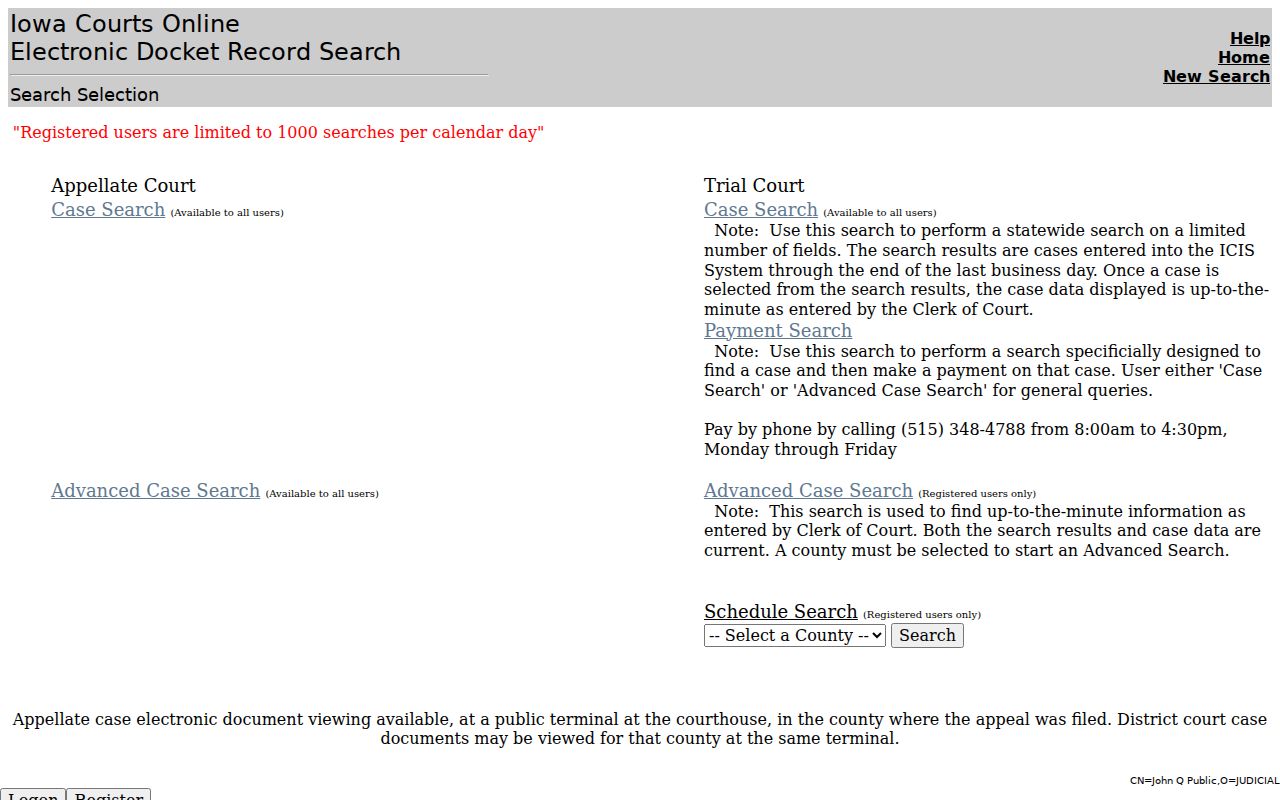
This is a docket tool, not a promise that every unserved warrant is public.
Sioux County Warrant Records: What They Show
The roster combines identifiers, dates, a type or section field, descriptors, charge text, bond, and a compact disposition field. Those columns help tell records apart, but several need explanation. The Sheriff publishes no code key. A displayed bond may no longer be the current release condition.
| Warrant number | An agency identifier in a format that can vary; no public key was located. |
|---|---|
| Issue and disposition dates | Dates tied to the roster entry, checked against the docket. |
| Type or section | A compact code that should not be guessed from initials. |
| Charge | The listed offense or court-enforcement reason. |
| Bond amount | A value to confirm with the Clerk, jail, or judge. |
| Disposition | A coded field whose public key was not found. |
Physical descriptors are one more reason not to republish rows. Anyone checking their own Sioux County record should compare more than a name and call an official office.
Sioux County Records Requests
When the roster and docket leave a precise question open, the Sheriff's Public Records page lays out in-person, email, fax, mail, and online contact routes. Its form asks for requester contact details and a clear description of the record sought. A narrow request naming the record, date range, and known identifier moves fastest. The office may require government identification. Fees for Sioux County records: record checks at $5, copies at 50 cents per page, and video or audio at $25, with research time billed after 30 minutes at $32 per hour. Requests are handled promptly, but no fixed completion time is promised. Open investigations, juvenile files, and other protected material may be withheld.
Request wisely: Define the agency record and confirm fees first; a records request is not a live warrant-status guarantee.
Sioux County Warrants: Who Issues, Who Serves
The Iowa District Court for Sioux County is the local trial court. Magistrates and district associate judges approve complaints, issue warrants, conduct initial appearances, and set release terms within that unified system. The Clerk keeps the docket and the financial record. City police may issue citations or help with service, but Sioux County has no separate public municipal-warrant database. The Sheriff serves county warrants, runs the jail, and publishes the PDF. Iowa Code section 804.4 also permits delivery to any peace officer for service anywhere in Iowa. The law-enforcement-only IOWA System links authorized agencies and NCIC. The public cannot search it.
Sioux County Sheriff's Office
4363 Ironwood Ave Ste 1
Orange City, IA 51041
712-737-2280
Sioux County Bond Context
An arrest in Sioux County starts with booking and an initial appearance before a magistrate. That hearing is not a decision on the charge. Iowa Rule 2.2 sets the timing. Appearance must happen within 24 hours when a magistrate is available, and no later than 48 hours. At the hearing the magistrate covers the complaint, counsel, probable cause, and release terms. Bond often follows Iowa's uniform schedule. It lists $25,000 for a Class B felony, $10,000 for Class C, $5,000 for Class D, $2,000 for an aggravated misdemeanor, $1,000 for a serious misdemeanor, and $300 for a simple misdemeanor. The schedule applies only in limited cases, when court is not in session and the arrest is not for a forcible felony. A judge can set different terms. The official bond schedule shows those starting points.
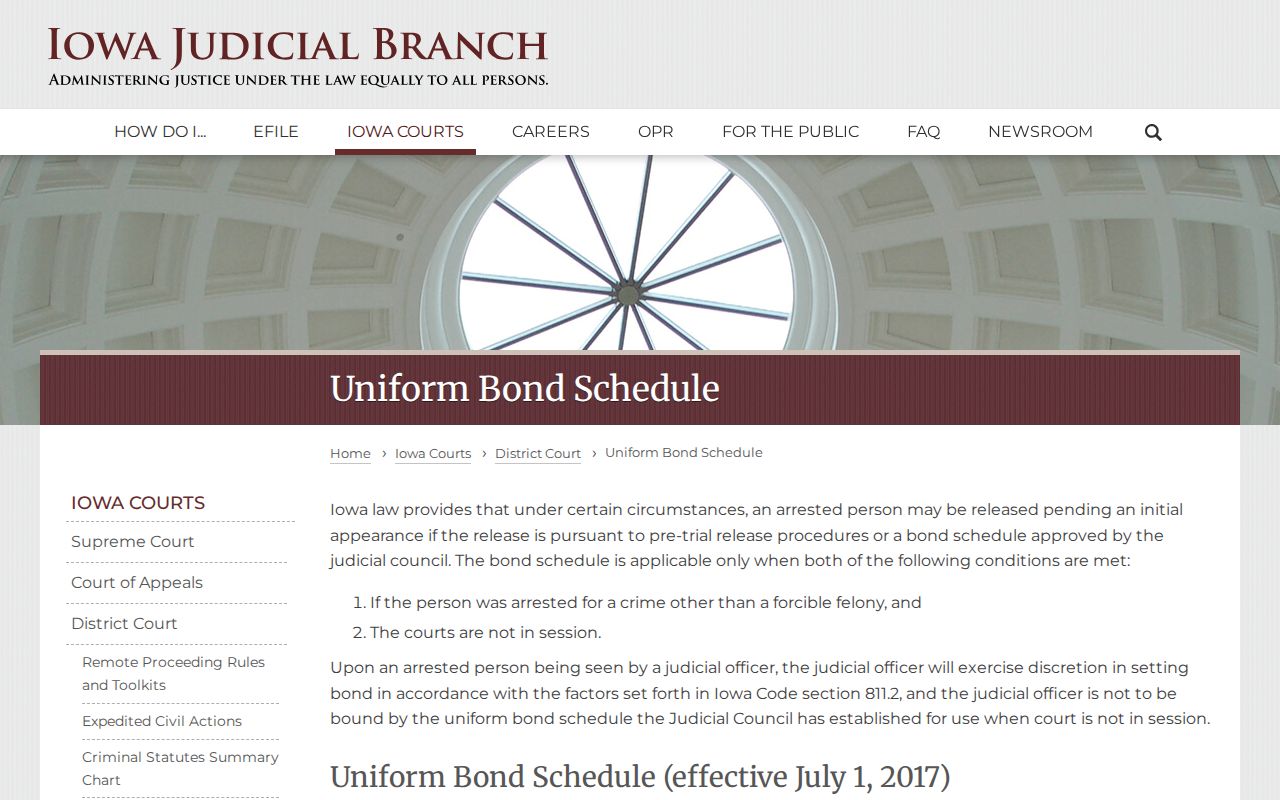
Sioux County publishes no separate bond-window procedure, so call the Clerk before trusting a roster amount.
Handling a Sioux County Warrant
Start by pinning down the issuing case in Sioux County. Get the case number, its current status, the charge or obligation, and any release condition. Ask the court what clears the warrant. Then ask what resolves the case behind it. Those answers can differ, because paying a debt may not recall an order and posting bond can free someone without dismissing the underlying charge. A phone call alone promises nothing. Sioux County posts no walk-in surrender policy, safe-surrender hours, or local recall form, so call the Clerk, the Sheriff, or the jail before appearing. An Iowa criminal-defense lawyer can review the docket, contact the court, and arrange an appearance, motion, or surrender when needed.
Important: Confirm court instructions and speak with counsel before surrender; continuous jail operation is not a public walk-in warrant window.
Sioux County Payment Scams
Sioux County court debt can be paid online by card, by mail, at the Clerk's office, or through the call center at 515-348-4788. A written or in-person payment-plan request works too. The traffic FAQ says a fine may generally lead to license suspension after 75 days past due. The docket and Clerk must confirm whether a failure-to-appear or warrant remains. Be alert for scams. A June 2026 Judicial Branch warning says impostors demanded money for supposed warrants and missed jury service. Officers do not collect fines. Verify any debt through the Clerk, the official ePayment page, or the official call center, and never follow a payment link or number supplied only by a threatening caller. The official scam warning gives verification advice.

Verify the case first, then use only a court-approved channel.
Warrant Record Access Under Iowa Law
Iowa Code Chapter 22 grants access to public records, subject to lawful exceptions and procedures. Not all warrant material is open. Section 804.29 protects arrest-warrant applications and related information until arrest and return or the first appearance, unless a court orders otherwise. Search-warrant applications follow section 808.13. Juvenile court and social records face special limits under section 232.147. A Sioux County search may therefore find a public roster entry or docket while other materials stay closed.
Key rule: Iowa Code Chapter 22 governs public access, while warrant and juvenile laws protect specific files.
Sioux County System Layers
The public in Sioux County sees three related layers. The docket records legal events and debt. The Sheriff PDF offers a dated agency snapshot, the IOWA System serves law-enforcement users with no public interface, and none can replace another.
- Court docket
- The case chronology kept by the Clerk and viewed through the state portal.
- Sheriff roster
- The public list with warrant fields and an update time.
- IOWA System
- Iowa On-line Warrants and Articles, an authorized-agency network.
- Confirmation
- A current answer from the court or serving agency.
A statewide DCI criminal-history check is a different animal. It costs $15 per last name, needs an exact birth date, omits some categories, and does not prove current warrant status in Sioux County.
Sioux County Sheriff Context
The Sioux County Sheriff serves a 769-square-mile area with 24-hour communications and more than 20,000 calls each year. Through May 31, 2026, its statistics listed 135 arrests, 11,088 communications calls, and 1,368 citations, and the office publishes no warrant total or clearance trend. These are workload measures. They are not active-warrant counts.
The distinction matters. Arrest and citation figures must not become warrant estimates in Sioux County; they simply explain why the list, docket, and phone checks run alongside a busy jail and dispatch operation.
Sioux County Most Wanted Limits
The Sioux County Sheriff app page advertises Most Wanted listings, arrests, inmates, alerts, and anonymous text tips. It publishes no separate current web roster. The page also lists no reward amount, tip number, partner list, or refresh schedule. Read the official app description, then confirm any details with the Sheriff. A most-wanted selection is curated. It is not the full active-warrant PDF. Neither should be copied into a private roster. The PDF is a broader, dated publication, and no most-wanted page equals the full warrant list. Do not approach a listed person; use an official law-enforcement channel and call 911 only in an emergency.
Confirm Sioux County Warrant Clearance
Money changing hands does not finish the job in Sioux County. A name leaving one screen does not either. Ask the Clerk whether a judge entered a recall, quash, satisfaction, or other order. Request a receipt or written confirmation. Then ask when the change should reach the Sheriff report. Keep the case number, receipt, bond paper, and court order together. If the PDF still shows the entry, contact the Sheriff with the case and order details. Skip repeated payments and informal promises from unknown callers. The court and Sheriff can reconcile any mismatch.
City Warrant Records in Sioux County
The five largest Sioux County cities run different police arrangements, but their court route ends at the Clerk and Iowa Courts Online. Sioux Center, Orange City, Rock Valley, and Hawarden publish police contacts. Hull relies on the Sheriff for police service. None keeps a separate public city warrant database.
Sioux Center Warrants
8,229 residents in 2020. City police route court records to county and state systems.
Orange City Warrants
6,267 residents. The county seat holds the Clerk and city public safety.
Rock Valley Warrants
4,059 residents. City police link court payment to Iowa's system.
Hawarden Warrants
2,700 residents. Hawarden Police also serve Ireton.
Hull Warrants
2,384 residents. The Sheriff's Office supplies police service.
A city contact can trace local origin. Then the Clerk confirms the order and the Sheriff confirms service status in Sioux County.