
How Traffic Warrants Work in Sioux County
Iowa's own traffic guidance sets the clock: the fine is due on or before the court date printed on the ticket. The citation or court order counts as the first notice. A reminder follows as the second. Skip a required appearance and the District Court docket may show failure to appear, contempt, or another enforcement step, and unpaid debt can push a file toward collection and license trouble. The court file controls what actually happened, not a driving-history report. Sioux County traffic cases sit inside Iowa's unified District Court structure, where judicial magistrates and district associate judges hear many simple-misdemeanor and traffic matters. The Sioux County Clerk of Court keeps the case and financial entries at 210 Central Ave SW in Orange City. A city police department may hand you the citation, but that creates no separate public city warrant database.
Start With the Sioux County Citation Docket
The official route is Iowa Courts Online Trial Court Case Search. Pick Trial Court and Case Search, then enter the identifying details from the ticket. The blue case-number link opens the detail view, and the Financial area can show eligible court debt, though the state cautions that online information is not the official court record. For the fuller picture, the official Iowa traffic citation guidance lays out the public search, payment, and payment-plan routes.
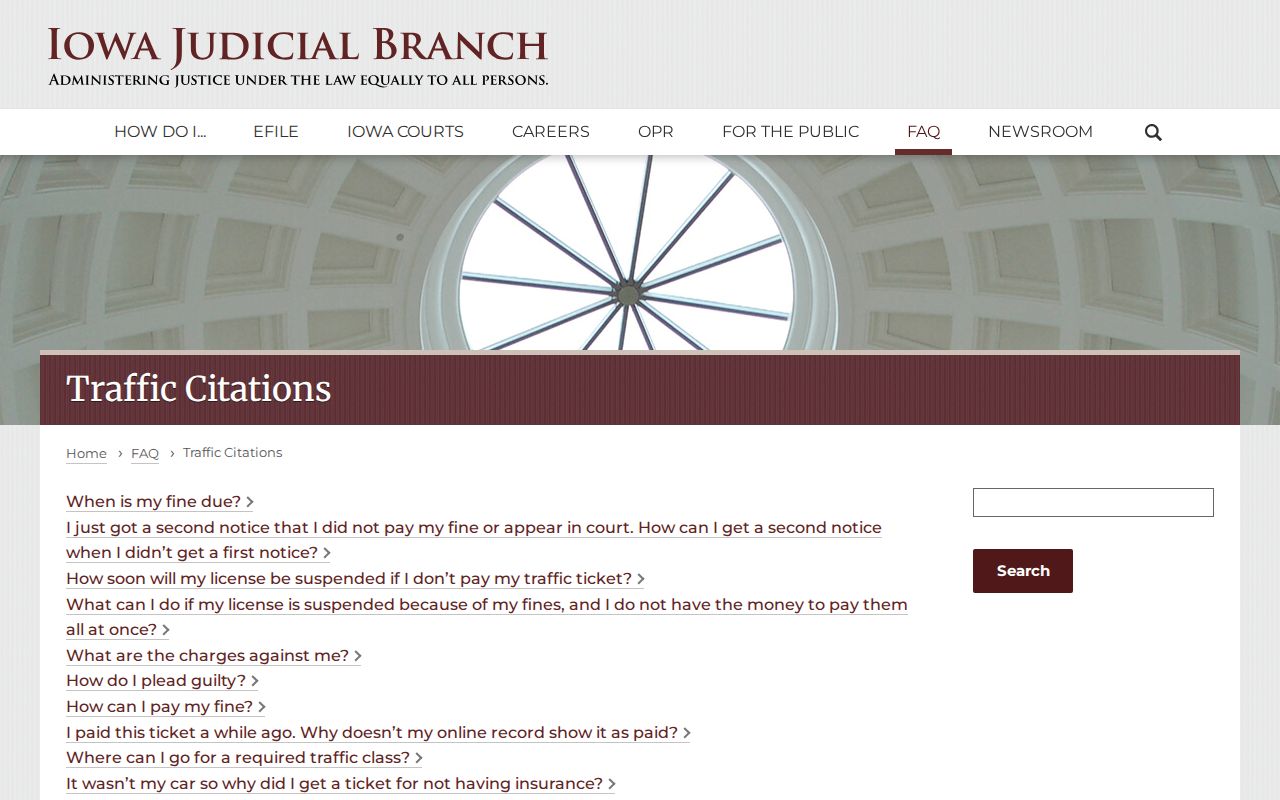
The official guidance keeps things in their proper setting: a Sioux County citation and court-debt record. Case-specific confirmation still rests with the clerk.
| Field or control | Use in the court search |
|---|---|
| Full name | Finds cases associated with the entered name. |
| Case number | Narrows the result to the known court file. |
| Citation number | Connects the traffic ticket to its case route. |
| Blue case number | Opens the public case detail. |
| Financial | Displays court debt and eligible payment data. |
| ePayment cart | Accepts payment on eligible debt, subject to clerk confirmation. |
Sioux County Traffic Warrant Checks
Sioux County publishes no dedicated public traffic-warrant portal. Search the trial-court docket first, then call the Clerk at 712-737-2286 or email CountyClerk.Sioux@iowacourts.gov. Ask whether the case holds a warrant, a failure-to-appear order, contempt action, collection placement, or required hearing. The Sheriff PDF may list a published county warrant, but a blank there does not clear a traffic case.
- Copy the citation and case numbers from official papers or the docket.
- Check the case event and Financial sections in Iowa Courts Online.
- Ask the Sioux County Clerk which order is active and what response it requires.
- Call the Sheriff at 712-737-2280 if its warrant list or service record is involved.
- Use a defined public-record request when a nonconfidential agency record is needed.
The IOWA System connects authorized law-enforcement agencies across Sioux County and beyond, with no public search interface. It never substitutes for clerk confirmation.
The 75-Day Sioux County Court-Debt Warning
The Iowa Judicial Branch traffic FAQ warns that a driver's license is generally suspended once a fine runs 75 days past due. Treat that as a timing warning only. It is not a Sioux County warrant deadline, and it does not prove every overdue file follows the same path. A docket may instead involve collection, a payment plan, a missed appearance, or a separate court order.
Ask the Sioux County clerk whether a collection agency or office holds the account. Ask about a reinstatement plan too. Even when the record triggers a license consequence, it stays a court matter.
Traffic Warrants: What They Show
A Sioux County traffic-warrant inquiry should tie the citation back to its underlying court file. Numbers matter here. A citation number is not a court case number, and neither is a Sheriff warrant number. Each identifier can pull up a different screen, so copy the labels along with the values.
| Citation number | The ticket identifier, such as citation as printed. |
|---|---|
| Case number | The Iowa District Court docket identifier. |
| Charge or violation | The traffic or simple-misdemeanor matter filed with the court. |
| Court date | The date for appearance or response stated by the court. |
| Financial entry | Fine, costs, fees, payments, or eligible court debt. |
| Warrant or FTA event | A docket action that the clerk must interpret and confirm. |
A Sioux County traffic warrant reflects the issuing court's record, not personal details posted for public view.
Rock Valley Routes Tickets to Iowa Courts
Rock Valley shows how the local pieces connect. Its Police Department page sends a "Pay your traffic ticket here" link straight to Iowa Courts Online. So a citation that starts with a city officer still runs through the county and state court system, not a separate municipal warrant site. The Rock Valley departments page holds that official route. Nearby Sioux Center, Orange City, Hawarden, and Hull list police or public-safety contacts but no dedicated traffic-warrant database. A call to a city office can help you find the original citation. For the court order itself, the payment status, and any required appearance, the Sioux County Clerk is the office that answers. Treat the city contact as a first step and the clerk as the record source for any active warrant tied to the ticket.
Clearing a Sioux County Traffic Warrant
Iowa gives you several ways to pay eligible court debt: card through the secure ePayment system, mail to the clerk, payment in person at the clerk's counter, or the court-debt call center at 515-348-4788 on weekdays from 8:00 a.m. to 4:30 p.m. To ask about a payment plan, go in writing or in person to the clerk's office in the county where the ticket was received. For Sioux County tickets, that means the local clerk handles the request.
Before paying: Ask whether payment alone recalls the warrant or whether the judge also requires an appearance, filing, or order.
The Iowa court ePayment page takes eligible debt, but paying there does not guarantee a Sioux County warrant is recalled. If an appearance is required, ask whether a lawyer should arrange it. Keep the receipt, the approved plan, and any recall order, then confirm the docket with the clerk.
Sioux County Payment Is Not Automatic Clearance
Paying a Sioux County balance and clearing the warrant are two different things. The court's financial record can show a zero balance while a failure-to-appear or contempt order still sits there, waiting for a judge to act. So keep the receipt, but do not treat it as a warrant-clearance order. Before you leave the clerk's window, ask which docket event actually recalls the warrant, who enters it, and when the Sheriff's records should catch up. Those three answers tell you the warrant is truly gone. When the debt has gone to collection, the Sioux County clerk can name the office holding it and say whether a reinstatement plan is available. If the court wants a motion, a hearing, or a personal appearance, an Iowa attorney can review the case and reach the issuing court directly. An online payment alone never closes the underlying traffic charge. Nor does it excuse a future court date.
How Traffic Warrants Trigger License Holds
A warrant, a failure-to-appear event, unpaid court debt, and a license suspension sit close together, but they are not the same thing. The Sioux County court creates and maintains the case events on its docket. The clerk keeps the docket and financial status current. The Iowa Department of Transportation applies a license hold once the legal conditions are met, while police and the Sheriff enforce warrants and use the authorized systems.
| Record | Meaning | Confirm with |
|---|---|---|
| Traffic warrant | Court-authorized arrest process in the traffic case | Clerk and serving agency |
| Failure to appear | Required court event was missed | Issuing court |
| Court debt | Fine, costs, and related financial obligations | Clerk or assigned collector |
| License hold | Driving privilege consequence under state process | Clerk and Iowa DOT |
Clearing one Sioux County record does not erase the others, so request written confirmation for each affected case.
Avoid Sioux County Warrant Payment Scams
Watch for warrant payment scams. In October 2025 the Sioux County Sheriff warned of callers claiming missed jury duty produced warrants and demanding money. The Iowa Judicial Branch added its own warning on June 9, 2026, tied to missed jury service, unpaid fines, and threats of arrest. Traffic cases are a natural opening for these calls. A scammer may quote a real-sounding citation or court-debt claim to seem legitimate.
Verify first: Iowa courts do not demand warrant money by text or phone, and law enforcement officers do not collect court fines.
Verify before you pay anything. Use the published clerk number, secure ePayment, or the official 515-348-4788 court-debt line. Never pay by Bitcoin, gift cards, or prepaid cards, and never use a number an unexpected caller gives you. If a message threatens immediate arrest, check Iowa Courts Online yourself and call the Sioux County Clerk. A calm official check protects both the case response and the payment record.